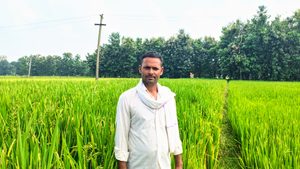
Om Prakash Yadav, a local agricultural service provider in Maharajganj, turns mechanized direct-seeded rice (DSR) into a profitable rural enterprise, expanding access to modern machinery for smallholder farmers through custom-hiring services and institutional linkages.
By Dr. Ajay Pundir, Dr. Dev Narayan Yadav, Dr. Dilwar Singh Parihar, Dr. Suryakanta Khandai, and Dr. Ashish Kumar Srivastava
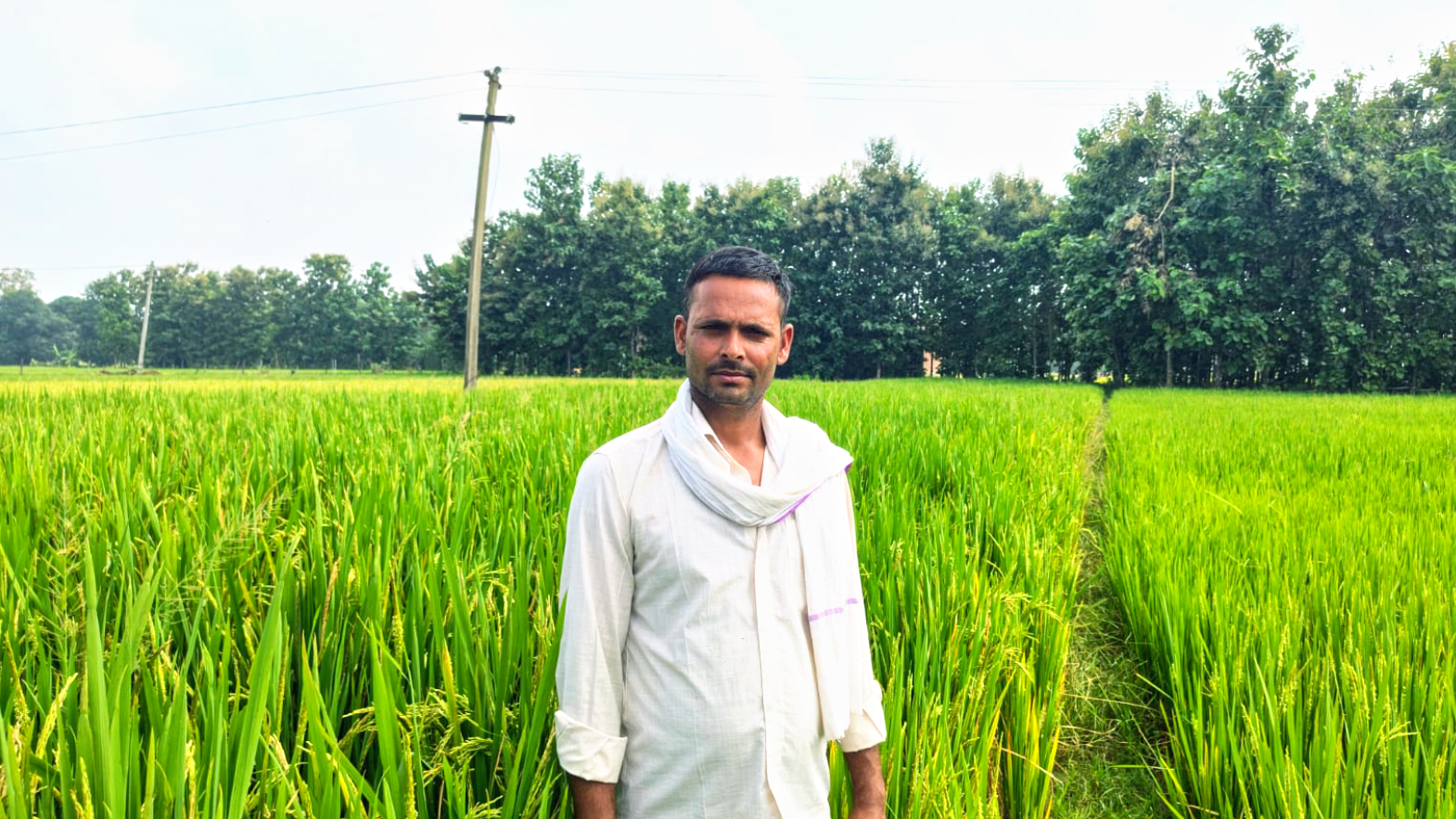
Location: Farenda Block, Maharajganj District, Uttar Pradesh, India
Season: Kharif 2026
Timely crop establishment and access to appropriate machinery are essential for scaling mechanized direct-seeded rice (DSR) in eastern Uttar Pradesh. For small and marginal farmers, custom-hiring services offer an affordable way to access specialized agricultural equipment without the substantial investment required for individual ownership. At the same time, they create new income-generating opportunities for rural entrepreneurs and agricultural service providers.
The experience of Om Prakash Yadav, a local agricultural service provider from Kathwalia Sarvjeet village in Farenda block, Maharajganj district, illustrates how conventional farm-service businesses can diversify into specialized mechanized DSR services.
Previously, Mr. Yadav primarily provided tractor-based agricultural operations using a 50 HP John Deere tractor, cultivator, rotavator and trolley, alongside seasonal farm transportation services. Recognizing the growing potential of mechanized DSR, he explored opportunities to expand his business by investing in specialized sowing equipment.
His engagement with the International Rice Research Institute (IRRI), through village-level interactions with farmers and service providers, encouraged him to take the next step. This was supported by the DSR awareness activities and machinery dealer linkages facilitated by IRRI under the Uttar Pradesh Agriculture Growth and Rural Enterprise Ecosystem Strengthening (UPAGREES) initiative.
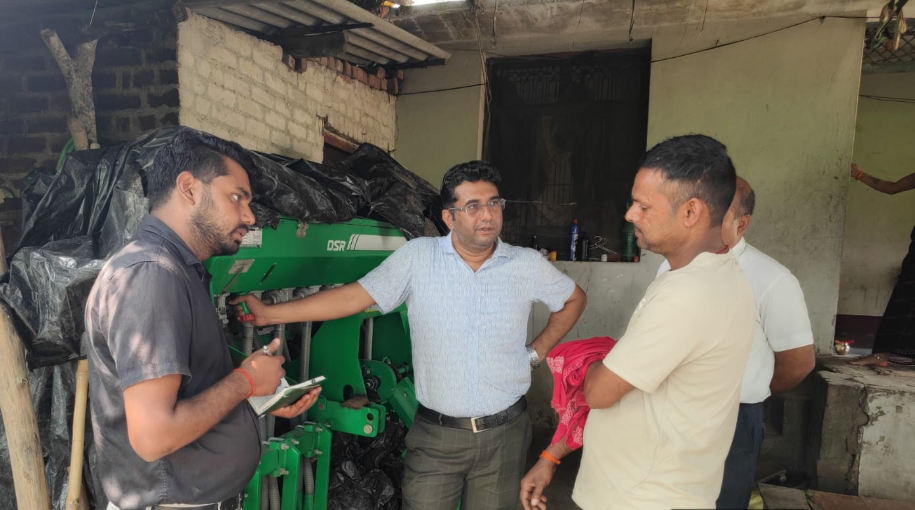
In April 2026, Mr. Yadav invested approximately ₹1.50 lakh in a Step Seeder, marking his transition towards specialized mechanized rice establishment services.
A single season, a promising business opportunity
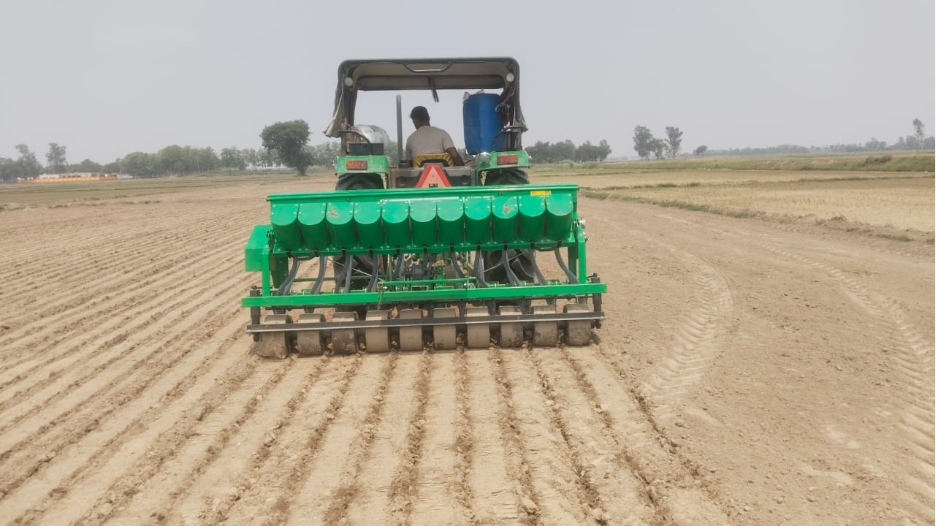
During the Kharif 2026 season, Mr. Yadav deployed the Step Seeder through a custom-hiring model, providing mechanized DSR sowing services to neighbouring farmers. At a service charge of ₹2,000 per acre, he covered approximately 150 acres, generating a gross service income of ₹3 lakh. After accounting for operational expenses of ₹1,06,250, including fuel, labour, tractor servicing and machine maintenance, he reported a net operating surplus of ₹1,93,750.
Notably, the income generated during the first season exceeded the initial investment in the machine, demonstrating the potential for mechanized DSR equipment to become a viable rural enterprise.
Economics of Step Seeder Custom-Hiring Services (Kharif 2026)
| PARTICULARS | AMOUNT |
| Area covered (30 days service) | 150 acres |
| Service charge | ₹2,000/acre |
| Gross service income | ₹3,00,000 |
| Fuel expenditure (5 lt per acre – 750 lt @ ₹95 per liter) | ₹71,250 |
| Tractor operator charges (₹600 per day for 30 days) | ₹18,000 |
| Helper charges (₹300 per day for 30 days) | ₹9,000 |
| Tractor servicing (LS) | ₹6,000 |
| Machine servicing and maintenance (LS) | ₹2,000 |
| Total operating expenditure | ₹1,06,250 |
| Net operating surplus | ₹1,93,750 |
| Initial machinery investment | ₹1,50,000 |
| Surplus after recovering machinery investment | ₹43,750 |
The investment recovery analysis indicates that the machine’s initial cost was recovered after approximately 116 acres of service coverage. The remaining 34 acres generated an additional operating surplus of ₹43,750 after accounting for the reported operating costs.
Combining farmer adoption with service entrepreneurship
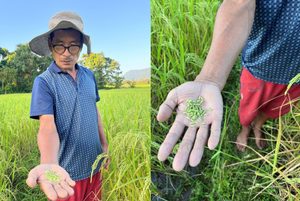
Beyond providing services to neighbouring farmers, Mr. Yadav also adopted mechanized DSR on approximately 14 acres of his own cultivated area, comprising two acres of owned land and 12 acres of leased land.
This dual role as a farmer and service provider enabled him to gain firsthand experience with the Step Seeder, understand its field requirements and demonstrate its application under local farming conditions. His experience also helped build confidence among neighbouring farmers considering mechanized DSR adoption.
By making the machine available through a custom-hiring arrangement, he enabled farmers to access mechanized sowing without purchasing expensive equipment individually. This approach is particularly relevant for smallholder farming communities, where fragmented landholdings and limited investment capacity often restrict access to modern agricultural machinery.
Mr. Yadav’s experience highlights the importance of institutional support in translating agricultural innovations into viable rural enterprises. Technology awareness, technical guidance, farmer engagement and linkages with machinery dealers played an important role in facilitating his investment decision.
The UPAGREES initiative, with IRRI as a knowledge partner, promotes mechanization-led agricultural transformation through cluster-based interventions, capacity development and the strengthening of local service-provider networks.
Village-level agricultural entrepreneurs such as Mr. Yadav can play a critical role in this ecosystem by connecting technology providers with farmers and ensuring timely access to mechanized services. Their participation can also strengthen the sustainability of technology adoption by creating locally available machinery services beyond the duration of individual demonstration programmes.
A replicable model for scaling mechanized DSR
The experience of Om Prakash Yadav demonstrates how an existing agricultural service business can evolve into a specialized mechanization enterprise through targeted technology adoption, institutional linkages and a custom-hiring business model.
His reported coverage of 150 acres in 12 villages during the first season and recovery of the initial machinery investment within the same season indicate promising economic potential. The model also offers a practical pathway to improve machinery access for small and marginal farmers while generating additional income and employment opportunities in rural areas.
Going forward, systematic assessment of machine performance, fuel consumption, sowing quality, operational efficiency, customer satisfaction and profitability across multiple seasons will help establish the technical and economic viability of this model.
From owning a tractor to building a specialized DSR service enterprise, Om Prakash Yadav’s journey demonstrates how local entrepreneurship, supported by appropriate mechanization and institutional partnerships, can accelerate technology adoption and create new livelihood opportunities for rural communities in eastern Uttar Pradesh.
The authors would like to acknowledge the IRRI Gorakhpur Cluster and the UPAGREES initiative.